
Claim Your Free Roofing Estimate Today
Metal Roof vs Tile Roof: Choosing the Best for Your Colorado Springs Home
Why Your Roofing Material Choice Matters in Colorado Springs
Choosing between metal and tile roofing represents one of the most significant decisions you will make as a homeowner in Colorado Springs. The material you select will protect your property for decades, influence your home’s energy efficiency, and directly impact your maintenance obligations and resale value. This decision carries particular weight in our region, where the climate subjects roofs to intense ultraviolet radiation at high altitude, sudden hailstorms that arrive with little warning, heavy snow accumulation during winter months, and dramatic temperature swings that can stress roofing materials in ways rarely seen at lower elevations.
Both metal and tile roofing systems offer proven durability and longevity when properly installed, yet they perform differently under the specific environmental stresses common to Colorado Springs. Metal roofing excels in shedding snow and resisting impact damage, while tile roofing provides exceptional thermal mass and fire resistance. The initial investment for either material significantly exceeds standard asphalt shingles, making it essential to understand which option aligns best with your home’s architecture, your budget timeline, and the particular exposure conditions of your property.
Homeowners throughout Colorado Springs neighborhoods from Old North End to Briargate face unique considerations based on their home’s age, roof pitch, structural capacity, and aesthetic requirements. Many older homes in established areas were originally designed for lighter roofing materials and may require structural reinforcement to support tile, while newer construction often incorporates the engineering necessary for either option. A professional roof inspection service can evaluate your home’s existing structure and identify any modifications needed before installation begins.
The decision between metal and tile also intersects with practical factors including the availability of qualified installers, the typical lifespan you can expect from each material in our climate, maintenance requirements throughout the seasons, and how each option performs during the hail events that strike our area with regularity. Understanding these variables before committing to a roofing contractor ensures you make an informed investment that serves your home well for the next 30 to 50 years.
Metal Roofing Performance in Our Mountain Climate
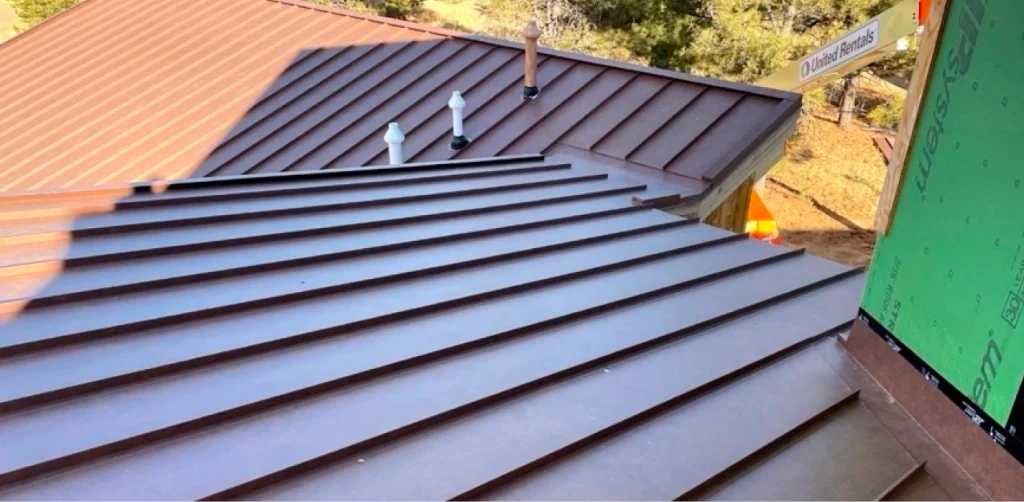
Metal roofing has gained substantial popularity among Colorado Springs homeowners over the past decade, and the reasons extend well beyond aesthetic appeal. Standing-seam metal panels and metal shingle systems deliver exceptional performance in the specific conditions we experience at 6,000 feet elevation. The material’s inherent strength allows it to withstand hail impacts that would destroy conventional roofing, though the gauge thickness and coating quality determine the exact level of protection. Most residential metal roofing installations use 26-gauge or 24-gauge steel with impact-resistant coatings specifically rated for hail zones.
Snow shedding represents one of metal roofing’s most valuable advantages in Colorado Springs. The smooth, slick surface prevents snow accumulation that can stress roof structures and create ice dam conditions. During typical winter storms that deposit 8 to 14 inches of heavy, wet snow, metal roofs begin shedding loads as soon as daytime temperatures rise above freezing. This characteristic reduces structural stress and eliminates the need for manual snow removal that many tile and asphalt roof owners face after significant accumulation.
The longevity of metal roofing systems typically ranges from 40 to 70 years depending on the specific product, coating system, and installation quality. Premium metal roofing products carry warranties that guarantee both the material integrity and the finish quality for 30 years or longer. When installed by a qualified roofing contractor with proper underlayment, flashing details, and fastener spacing, metal roofs require minimal maintenance beyond periodic inspections. The material does not crack, curl, or lose granules like composition shingles, and it resists the UV degradation that affects many roofing products at high altitude where solar radiation intensity exceeds sea-level conditions by 25 percent.
Cost considerations for metal roofing in Colorado Springs typically range from $12 to $18 per square foot installed for standing-seam systems, and $9 to $14 per square foot for metal shingle products. These figures reflect current material costs and labor rates for experienced installers. While the initial investment exceeds tile roofing in many cases, the maintenance-free longevity and energy efficiency gains often justify the premium. Metal roofing reflects solar heat rather than absorbing it, which can reduce cooling costs during our intense summer months when afternoon temperatures regularly reach the 90s. A residential roofing service familiar with metal installation techniques ensures proper thermal expansion accommodation, which prevents the fastener failures and panel distortion that plague poorly installed systems.
Tile Roofing Benefits and Local Considerations
Tile roofing brings a distinct architectural character to Colorado Springs homes, particularly in neighborhoods where Mediterranean, Spanish Colonial, or Southwestern design influences dominate. Concrete and clay tile systems offer proven durability in our climate, with properly installed tile roofs regularly exceeding 50-year service lives. The material’s inherent thermal mass provides natural insulation benefits, moderating attic temperatures during both summer heat and winter cold. This thermal performance translates to measurable energy savings and improved indoor comfort throughout the year.
Clay tile and concrete tile both perform well in Colorado Springs conditions, though each material brings specific advantages. Clay tile offers superior color retention and slightly better freeze-thaw resistance due to its lower porosity, while concrete tile provides a more budget-friendly option with excellent durability and a wider range of profile styles. Both materials achieve Class A fire ratings, which provides valuable protection in areas where wildfire risk exists. The Waldo Canyon and Black Forest fires reminded Colorado Springs residents that fire-resistant roofing offers tangible safety benefits, particularly for homes in interface zones where urban development meets wildland areas.
Tile roofing installation requires careful attention to structural capacity, especially in older homes not originally engineered for the material’s weight. Concrete tile typically weighs 9 to 12 pounds per square foot, while clay tile ranges from 8 to 10 pounds per square foot. Many homes built before 1990 in established Colorado Springs neighborhoods used roof framing sized for asphalt shingles weighing 2 to 3 pounds per square foot. Upgrading to tile often necessitates structural reinforcement, which a thorough roof inspection service can identify during the planning phase. The reinforcement investment typically ranges from $2,000 to $6,000 depending on the home’s size and existing structure, but this one-time expense enables decades of tile roofing performance.
Maintenance requirements for tile roofing center primarily on underlayment replacement and occasional tile repair or replacement. Individual tiles can crack from impact or break during severe hail events, though quality tile products withstand most hail sizes without damage. The underlayment beneath tile roofs typically requires replacement every 20 to 25 years, which involves removing and later reinstalling the tile. This maintenance cycle represents the primary ongoing cost for tile roofing systems. A roofing company experienced in tile work can perform underlayment replacement efficiently, minimizing labor costs while ensuring proper installation details that protect against wind-driven rain and snow infiltration.
Aesthetic versatility gives tile roofing an advantage for homeowners seeking specific architectural styles. Tile products now include flat profiles that mimic slate, curved barrel tiles that create Old World character, and interlocking profiles that provide modern clean lines. Color options span earth tones, terra cottas, grays, and even custom glazed finishes. This design flexibility allows tile roofing to complement virtually any home style, from traditional ranch homes to contemporary designs. The material’s proven longevity and low maintenance requirements make it particularly attractive for homeowners planning to remain in their homes long-term.
Direct Comparison Framework for Colorado Springs Homes
When homeowners evaluate metal against tile roofing for Colorado Springs properties, several key comparison factors determine which material best serves their specific situation. Initial cost represents the most immediate consideration, with metal roofing typically ranging from $9 to $18 per square foot installed and tile roofing spanning $11 to $20 per square foot installed depending on the specific product selected and any structural reinforcement required. These cost ranges reflect current market conditions and the labor rates charged by qualified local installers.
Longevity projections favor both materials substantially over standard composition roofing. Metal systems typically deliver 40 to 70 years of service, while tile roofs regularly exceed 50 years and occasionally reach 100 years when properly maintained. The practical difference in longevity often proves minimal when both materials outlast typical homeownership durations. Most Colorado Springs homeowners occupy their properties for 12 to 18 years on average, meaning either material will likely serve multiple ownership cycles without replacement.
Climate fit becomes critical in our specific environment. Metal roofing excels at shedding snow, resisting hail damage when proper gauges and coatings are specified, and reflecting solar heat during summer months when the high-altitude sun delivers intense ultraviolet radiation. The temperature fluctuations we experience, where afternoon highs reach the 80s or 90s before plunging to the 40s or 50s overnight, create thermal expansion and contraction cycles that metal roofing accommodates through proper fastening and panel design. Installers familiar with these requirements use fastening systems that allow the metal to move without stressing connections or creating leaks.
Tile roofing performs well in freeze-thaw cycles when quality products are selected, though homeowners should specify tiles rated for severe weather zones. The material’s thermal mass moderates attic temperature swings, which reduces heating and cooling demands. During the hail events that strike Colorado Springs with regularity, particularly the severe storms that develop along the Palmer Divide during late spring and early summer, tile roofing can sustain damage that requires individual tile replacement. Concrete tile typically withstands hail up to 1.5 inches in diameter, while larger stones can cause cracking. Metal roofing resists denting from stones up to 2 inches when premium gauges and impact-resistant coatings are used, though cosmetic denting may occur with severe impacts.
Maintenance requirements differ substantially between the two materials. Metal roofing demands minimal ongoing maintenance beyond periodic inspections to verify fastener integrity and sealant condition around penetrations. Most homeowners schedule a roof inspection service every 3 to 5 years to identify any developing issues before they create leaks. Tile roofing requires similar inspections plus occasional tile replacement when breakage occurs and underlayment replacement on a 20 to 25-year cycle. The underlayment work represents a significant expense, typically costing $4,000 to $8,000 for an average home, but it extends the tile roof’s service life indefinitely.
Aesthetic considerations often determine the final decision when both materials meet performance and budget requirements. Metal roofing suits contemporary, modern farmhouse, and transitional architectural styles particularly well. The clean lines of standing-seam panels complement modern design sensibilities, while metal shingle products can mimic traditional materials in more conventional settings. Tile roofing brings warmth and texture that enhances Mediterranean, Spanish, Southwestern, and even Craftsman-style homes. The material choice should harmonize with the home’s overall design language and the neighborhood context. A residential roofing service can provide samples and visualization tools that help homeowners assess how each material will appear on their specific home.
Making Your Decision with Professional Guidance
The choice between metal and tile roofing ultimately depends on your specific priorities, your home’s structural characteristics, your budget parameters, and your long-term plans for the property. Homeowners who prioritize snow shedding, minimal maintenance, and contemporary aesthetics often find metal roofing the superior choice. Those who value thermal mass, fire resistance, and traditional architectural character typically prefer tile roofing despite the higher maintenance requirements and potential structural modifications needed.
Before making a final decision, schedule a professional assessment that evaluates your existing roof structure, identifies any reinforcement needs, and provides accurate cost projections for both materials. A thorough inspection reveals factors that may influence your choice, including roof pitch, existing ventilation adequacy, structural capacity, and the condition of roof decking. These variables affect installation complexity and total project cost, sometimes tipping the balance toward one material over the other.
Colorado Springs homeowners benefit from consulting with a roofing contractor who maintains experience with both metal and tile installations. Installers familiar with both materials can provide objective comparisons based on your home’s specific conditions rather than steering you toward whichever product they prefer to install. Ask potential contractors about their experience with installations at our altitude, their familiarity with local wind and snow load requirements, and their approach to hail-resistant specifications. Quality installers carry manufacturer certifications, maintain proper licensing and insurance, and provide detailed written proposals that specify materials by brand and model number.
Consider obtaining proposals for both metal and tile systems to compare exact costs and specifications side by side. The price difference may prove smaller than anticipated, or structural requirements might make one option significantly more practical. Some homes have roof pitches or architectural details that favor one material, while others accommodate either choice equally well. The proposal process also reveals each contractor’s communication style, attention to detail, and professionalism, which proves valuable when selecting the team that will work on your home.
Financing options can influence the decision timeline and material choice. Both metal and tile roofing qualify for home improvement loans, and some manufacturers offer financing programs that make premium materials more accessible. The long-term value proposition of either material often justifies financing the initial investment rather than settling for a shorter-lived roofing solution that will require replacement in 15 to 20 years.
Once you have selected your material and contractor, confirm that the installation schedule accommodates proper weather conditions. Spring and fall typically offer the most favorable installation windows in Colorado Springs, avoiding both winter cold that affects sealant performance and summer heat that makes roof work more challenging. A quality roofing company will schedule your project during optimal conditions and communicate clearly if weather requires timeline adjustments. The installation itself typically takes 3 to 7 days for most residential projects, depending on home size, roof complexity, and material choice. Proper installation represents the foundation of decades of reliable performance, making contractor selection as important as material choice.
